LabelRules
Describe label rules in plain English. Automatically select layouts, resolve customer codes and check each job before printing.
Explore LabelRules ↗KitProof
Turn plain English component rules into automatic kit checklists, then check scans against the expected parts and quantities.
Explore KitProof ↗WorkSteps
Turn plain English rules into automatic step selection for each unit, with required evidence and a record of completed work.
Explore WorkSteps ↗FactorySpec
Apply approved product rules and calculations automatically to turn dimensions and options into manufacturing requirements.
Register early-access interest ↗SmartFACT Data
Maintain reference tables with ConfigSheets or bring shop orders into SmartFACT through reviewed connectors. Check changes and deliver data to the products that use it.
Explore SmartFACT Data ↗OrderRun
Turn plain English rules into automatic order checks and destination selection, with controlled production release.
Register early-access interest ↗ParcelOffice
Scan the work order and the parcel choice to book the courier and print the labels. Approved plain English rules recommend or choose the parcel.
Explore ParcelOffice ↗RefillFlow
Scan an empty container to send the right refill request to stores. Approved plain English rules set the stores queue, priority, ticket printer and escalation.
Explore RefillFlow ↗RemnantRack
Label each offcut, find a suitable length before cutting new stock and record what you used. Approved plain English rules decide what to keep and where it goes.
Explore RemnantRack ↗ToolCustody
Check a shared tool before handover, record who has it and keep damaged or overdue tools out of the next issue. Explore an invited trial for one factory crib.
Explore ToolCustody ↗StoresFlow
Receive, put away, reserve and issue stores material with barcode checks, keeping held, reserved and available stock apart. Explore an invited trial for one stockroom.
Explore StoresFlow ↗LotTrail
Follow a lot or serial number through the records your factory already keeps, with the source of each link and the gaps shown. Explore an invited trial with two declared sources.
Explore LotTrail ↗CheckStation
Scan an identified unit to get its approved final-inspection checks, then record exact readings with their result, holds and release history.
Register early-access interest ↗ReclaimStation
Book returned units in, recover and label the usable parts, release them independently and record the unit each goes into. Explore an invited trial for one product family.
Explore ReclaimStation ↗ScannerBench
See the text and key events your keyboard scanner sends. Compare them with the value you expected.
Test a scanner ↗PrintBench
Print a known PDF, measure its reference marks and compare scans from the printed codes.
Check a print ↗CardBench
Create 100 × 50 mm bin and rack cards with Code 128 or QR, from one record or a CSV.
Make bin cards ↗CountBench
Count stock by location with a barcode scanner, compare it with a stock file and export the results. No account needed.
Start a free count ↗BarcodeBench
See exactly what a scanned barcode contains, with hidden characters shown and GS1 fields, check digits and dates explained. No account needed.
Inspect a barcode ↗MatchBench
Scan a reference and each label, see an exact match or the first difference, and download the results. No account needed.
Start a free comparison ↗TagBench
Scan an item or location, note what needs attention, print a review tag and keep a review list. No account needed.
Make a free tag ↗FindBench
Load your own parts and locations CSV, scan a code and see every location it lists. No account needed.
Start a free lookup ↗ManifestBench
Check cartons, pallets or serial numbers against a list with a phone or scanner and see what is missing. No account needed.
Start a free check ↗FeedBench
Check CSV and JSON files exactly as written, preview a column mapping and compare two versions by key. No account needed.
Check a file free ↗CycleBench
Time work cycles and changeovers on a phone, record interruptions with reasons and download the results. No account needed.
Start a free study ↗OffcutBench
Label the offcuts on your rack, find a piece long enough before cutting new stock and record what you used. No account needed.
Track offcuts free ↗TraceBench
Load one or two CSV exports and follow a lot or serial forwards or backwards, with the row behind every link. No account needed.
Start a free trace ↗ReclaimBench
Record the parts recovered from each return, label them with a QR code, check them and record the unit each one goes into. No account needed.
Track recovered parts free ↗GuidBench
Generate GUIDs, UUID v4 and v7, ULIDs and Nano IDs, format and download batches, or inspect a UUID in your browser. No account needed.
Generate identifiers ↗OctetBench
Inspect and edit text, hex, Base64 and binary bytes in your browser, reveal hidden characters and compare byte sequences. No account needed.
Inspect some bytes ↗PatternBench
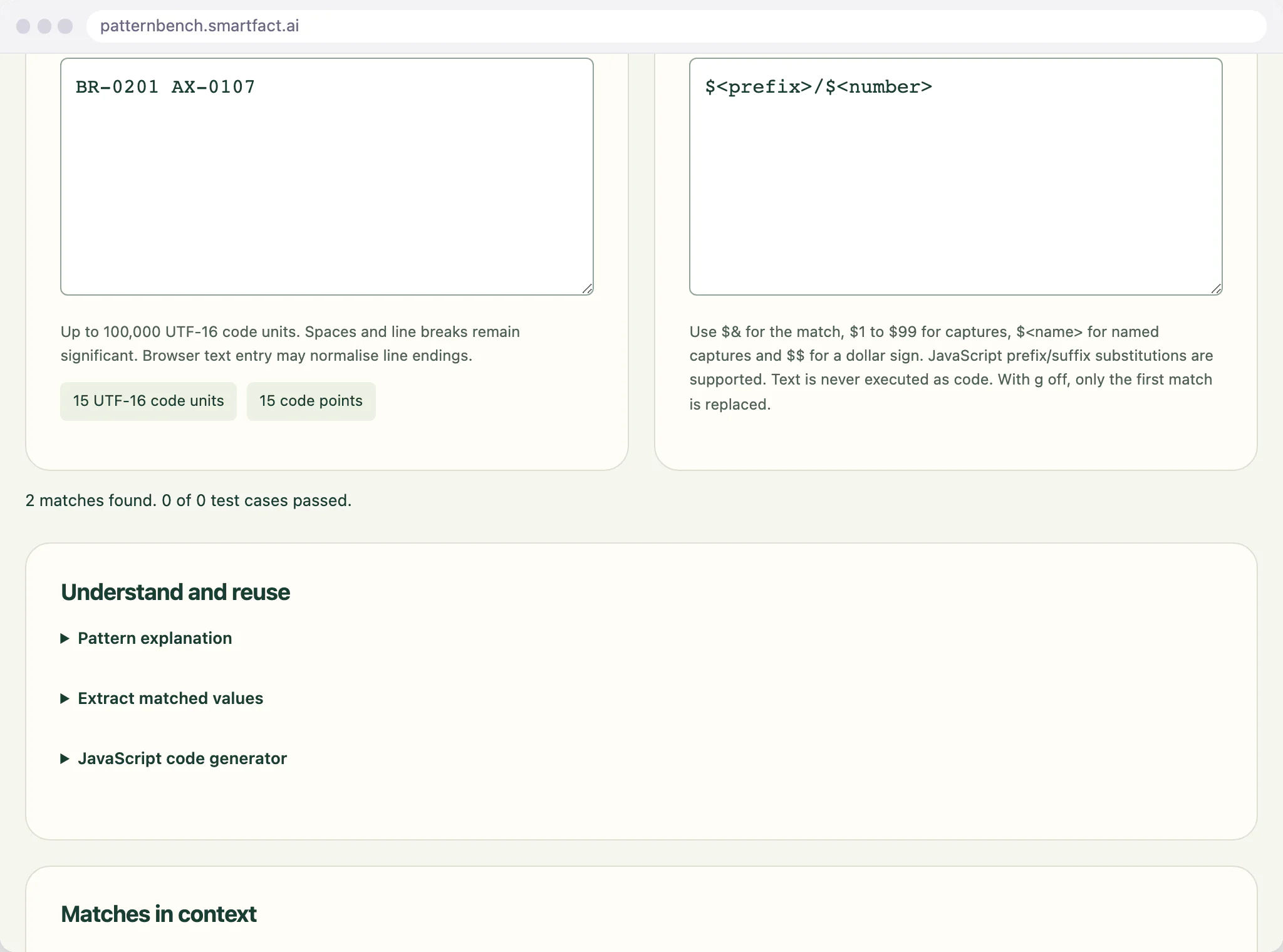
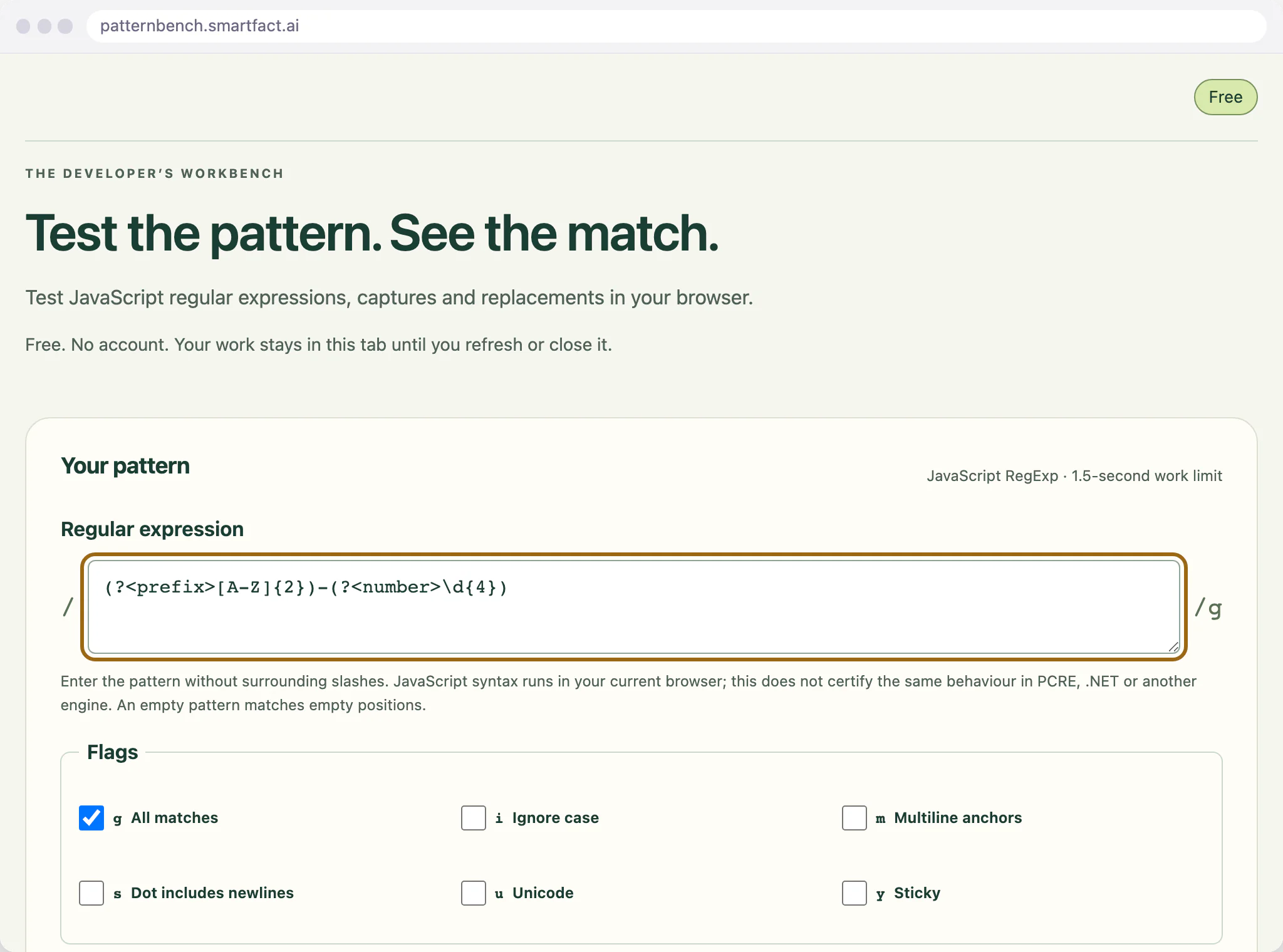
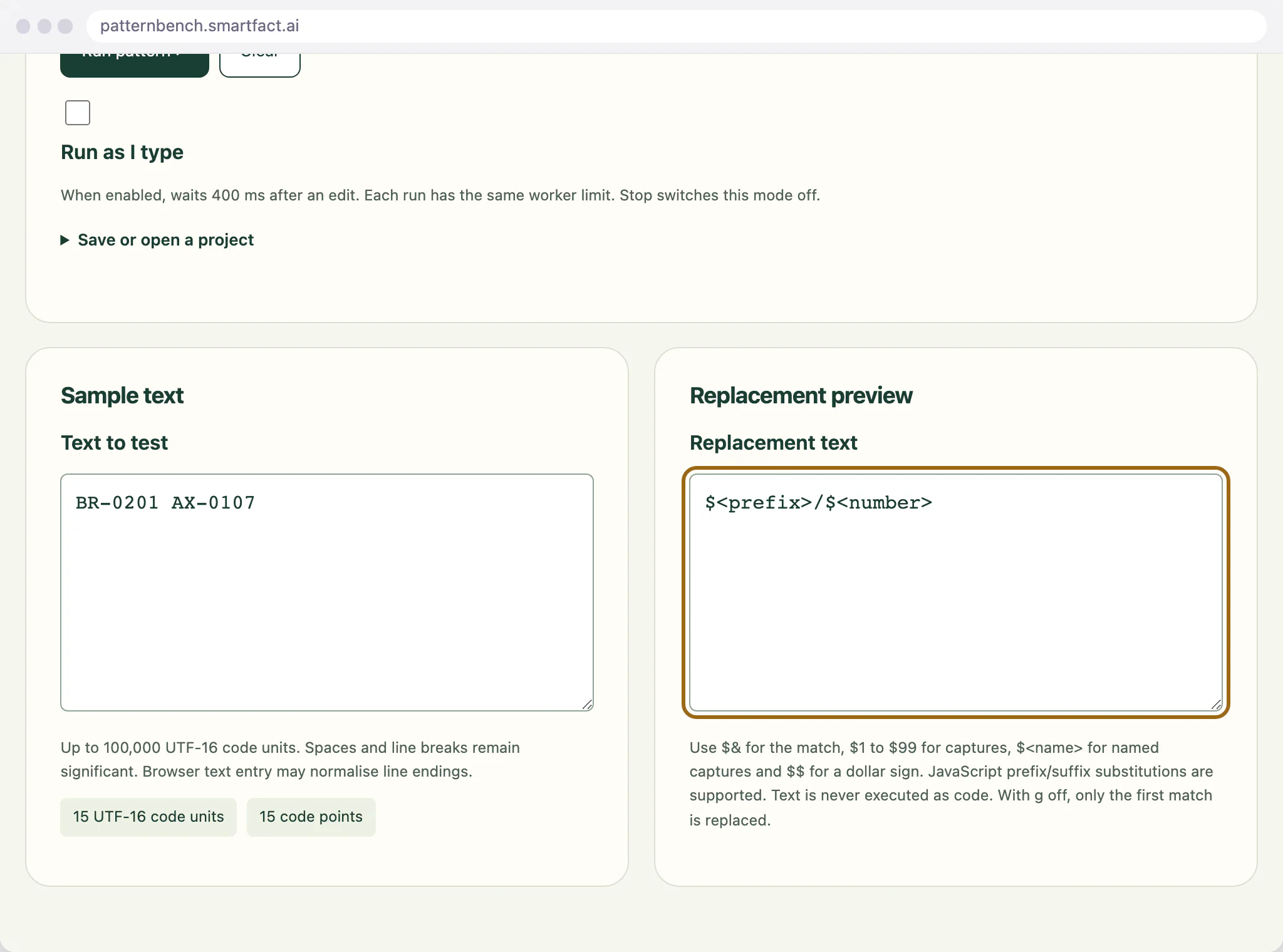
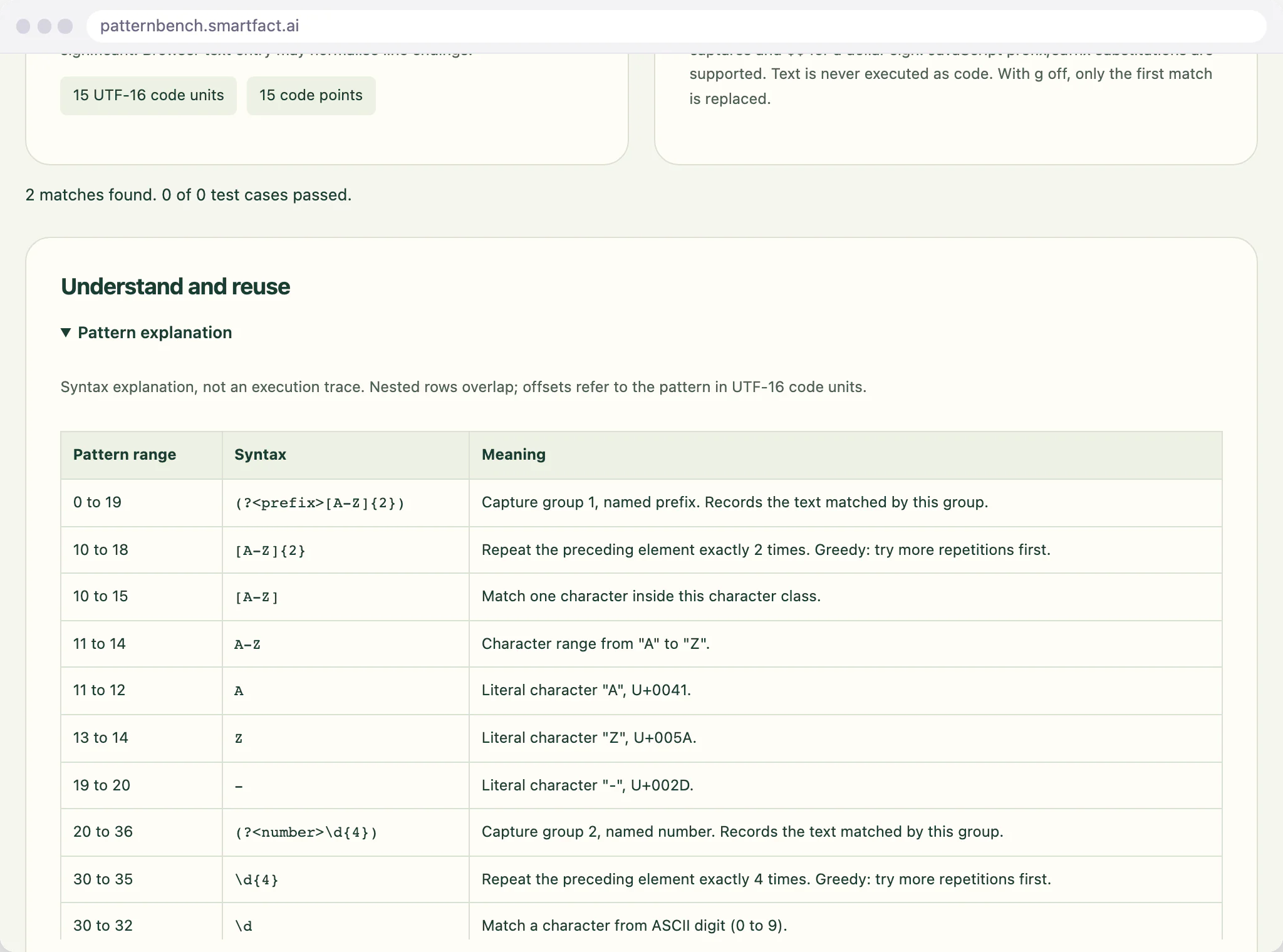
Test JavaScript regular expressions in your browser, inspect matches and captures, preview replacements and check expected cases. No account needed.
You are hereSmartFACT Help
Step-by-step guides and interactive demonstrations for the SmartFACT suite. Read the instructions, watch a task or practise with real product screens and sample data.
Open SmartFACT Help ↗
 Invited trial


